Dredging Hose Buying Guide
Choose the duty before the construction
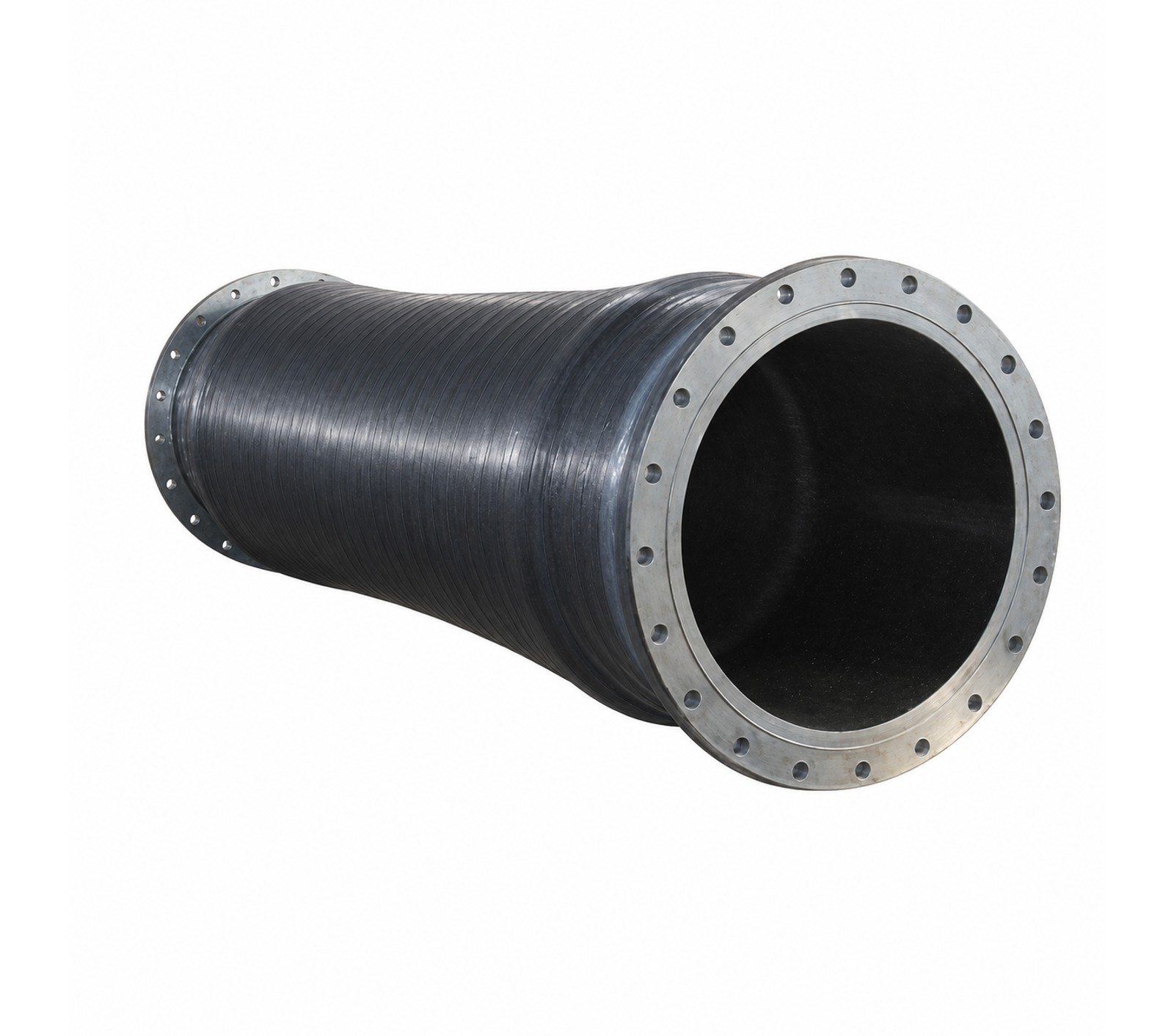
A dredging hose forms one part of a pipeline carrying sediment, slurry, sand, seawater or another specified mixture. Begin by identifying where the hose sits in that system. A suction-side connection, a discharge section and a floating pipeline section have different duties. The product photograph helps identify the general construction, but it does not establish the dimensions or rating of the supplied assembly. Define the operating conditions and connection drawing before selecting a hose family.
Describe the conveyed material
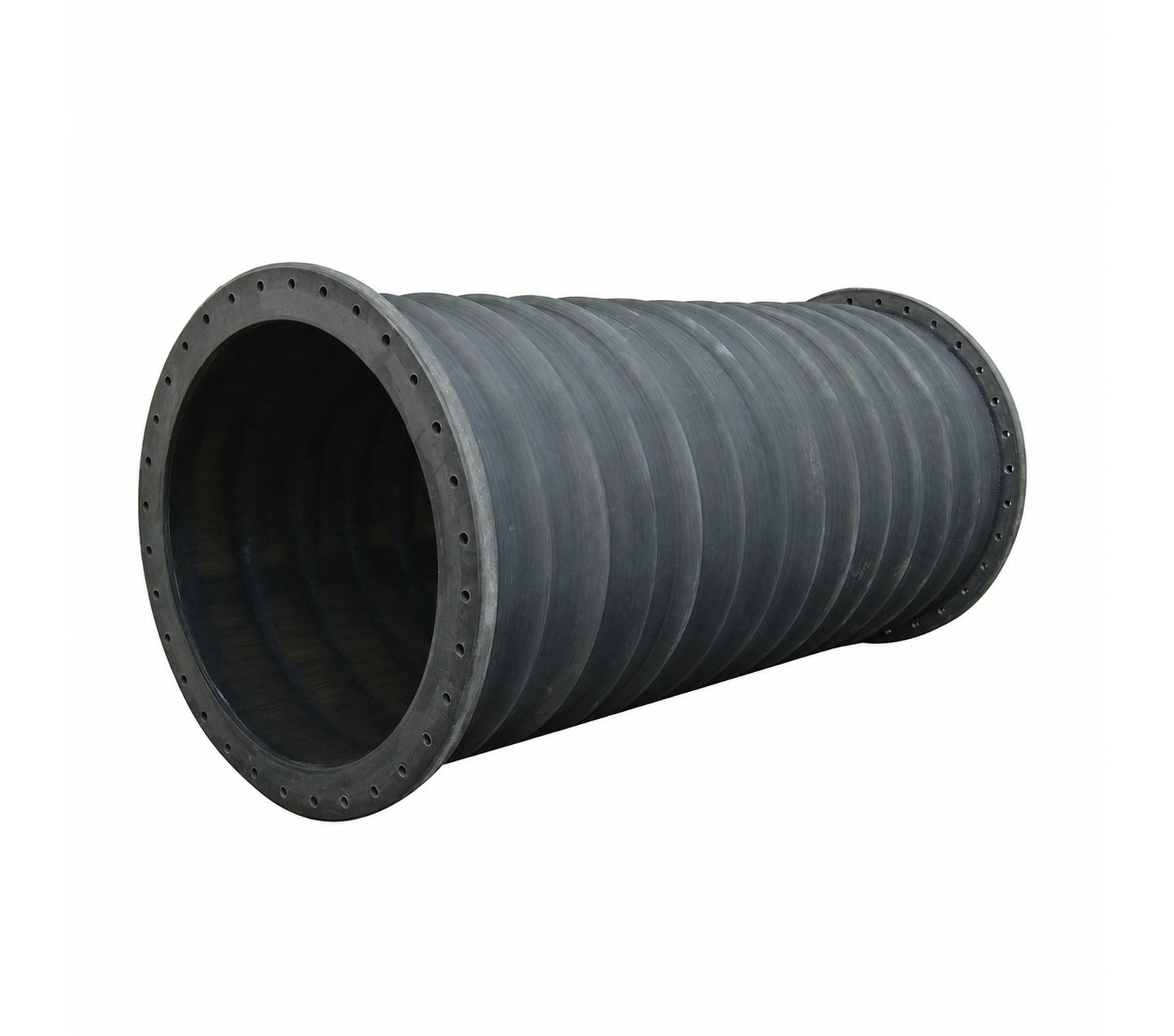
Provide information about the liquid, the solids and their concentration, together with any relevant particle-size or abrasion information. Two projects using the same nominal bore may have different lining and wear requirements. State the expected service conditions and how the hose will be inspected or replaced. An abrasion-resistant material description is not a quantified wear-life guarantee. Where a particular lining compound, thickness or wear-indicator arrangement is required, specify it in the enquiry and obtain confirmation for the proposed construction.
Separate suction, working pressure and burst pressure
For suction duty, state the required vacuum and installation arrangement. A pressure rating alone does not prove suitability for every suction condition. For discharge duty, provide normal operating pressure, surge conditions and the expected duty cycle. The suction and discharge references list a maximum working-pressure value of up to 35 bar across configurations. The discharge source also mentions burst-pressure configurations up to 150 bar. These are different concepts: a burst value is not an operating limit and neither maximum applies automatically to every hose size.
Define flange and dimensional requirements
Send the nominal bore, face-to-face length and the mating flange drawing. Include the flange standard, outside diameter, bolt circle, number and size of holes and the required sealing face. Confirm the lining arrangement at the ends as well as through the hose body. Avoid choosing from a visual resemblance or a general flange description. A project drawing also helps identify support points, installation space and the relationship between adjacent pipe sections. Final dimensions should appear in the agreed supply documentation.
Review reinforcement and handling loads
The suction and discharge constructions combine rubber with fabric reinforcement and embedded steel-wire coils. Such descriptions identify the general build, but they do not establish a universal allowable bend, unsupported span or external-load capacity. Describe how the assembly will be installed, supported, moved and stored. Include any relevant wave movement, local compression or end-loading conditions. Confirm the handling instructions and allowable installation geometry for the selected construction rather than inferring them from its corrugated appearance.
Specify floating-line requirements separately
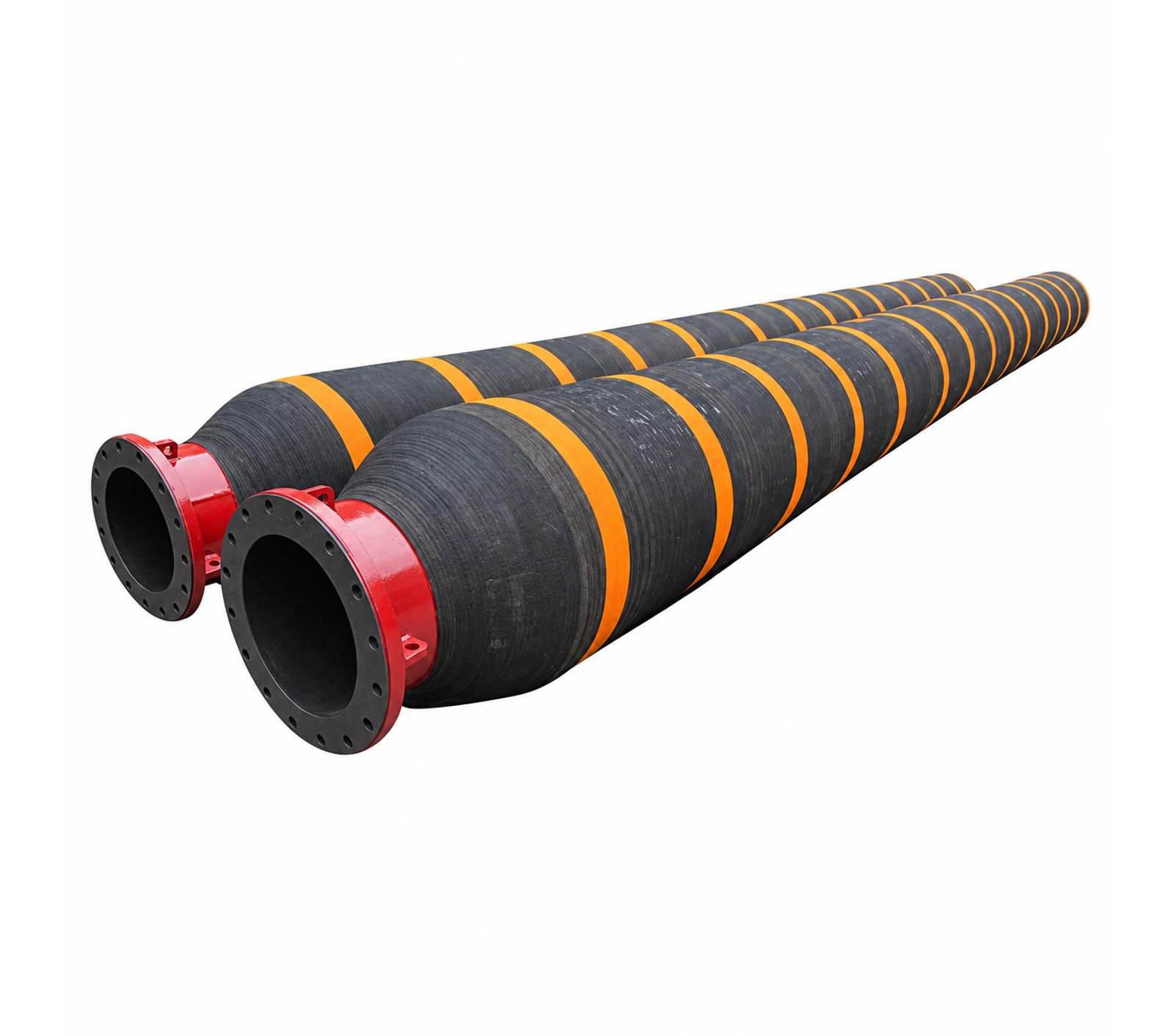
The floating reference uses an abrasion-resistant NR/SBR tube, high-tensile fabric and helix steel wire, an independent foam layer and a CR cover. Its source includes a working-condition bending reference of 0° to +45° and an emergence reference of at least 20% of total volume. These references need confirmation against hose dimensions, the conveyed material and the complete floating-line arrangement. State the required buoyancy, operating pressure, installation layout and environmental conditions so the proposed section can be reviewed for the actual project.
Prepare the enquiry and confirm the final assembly
The three products carry a -25°C to +80°C temperature reference. Confirm the actual medium and operating temperatures, including any short-term conditions, for the supplied hose. Send the selected family, dimensions, flanges, operating duty and quantity, together with inspection, testing, documentation or packaging requirements. Kaida can use this information to review the requested quotation scope. Confirm the final construction and rating in the approved drawing and order documentation. Do not treat a general catalogue maximum as a substitute for an assembly-specific agreement.
Products in This Category
Send your dredging hose drawing and service requirements to Kaida.