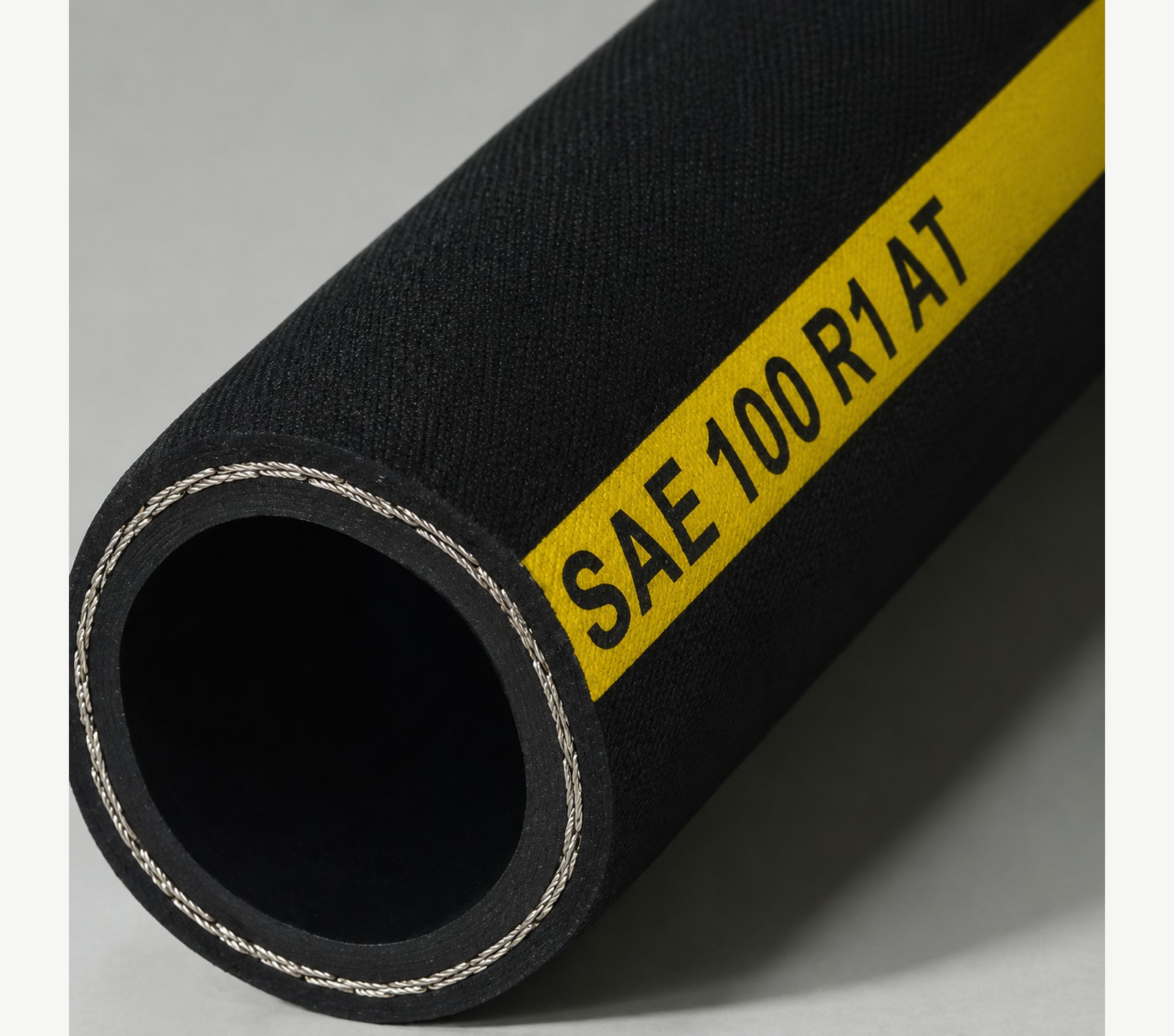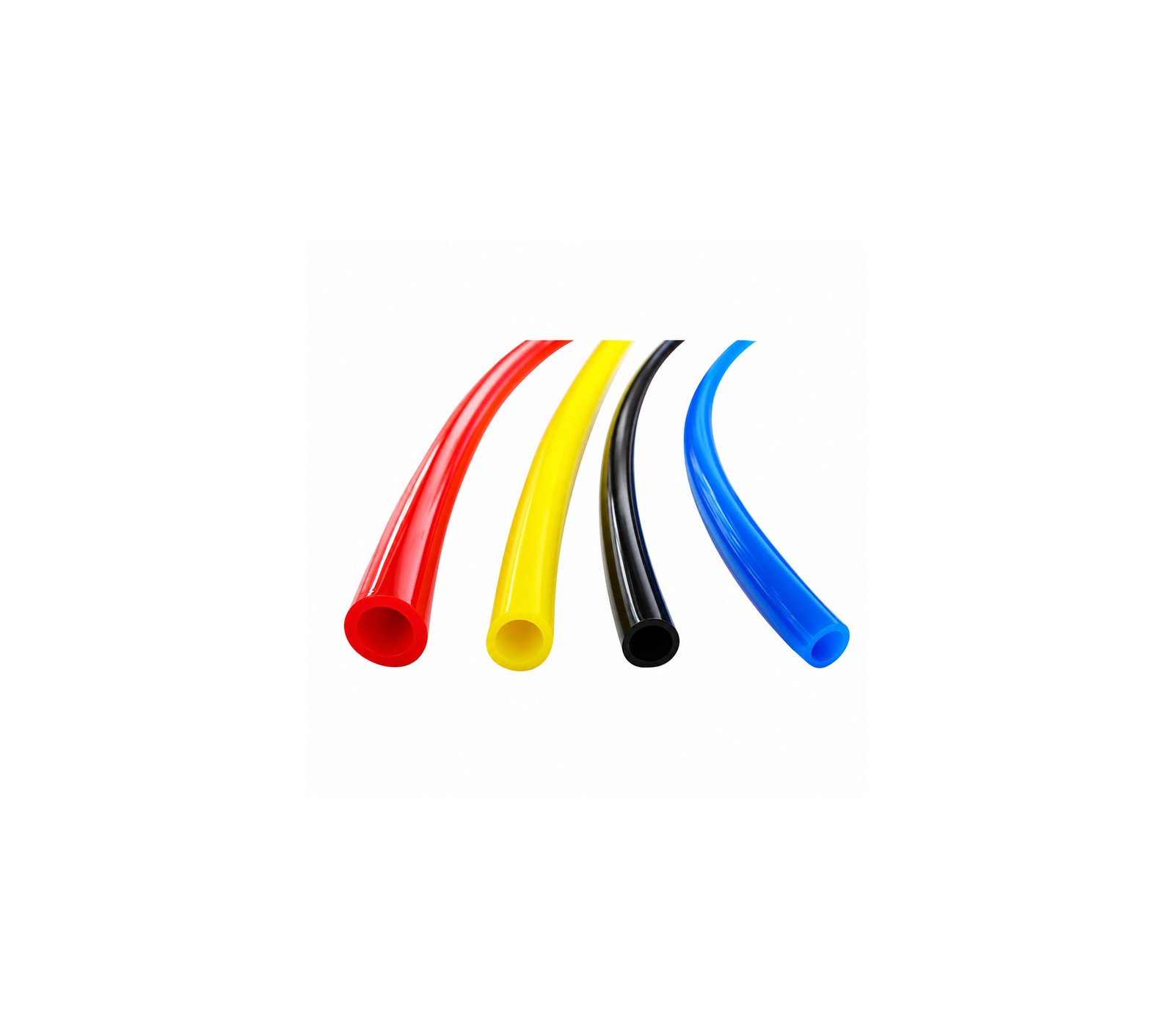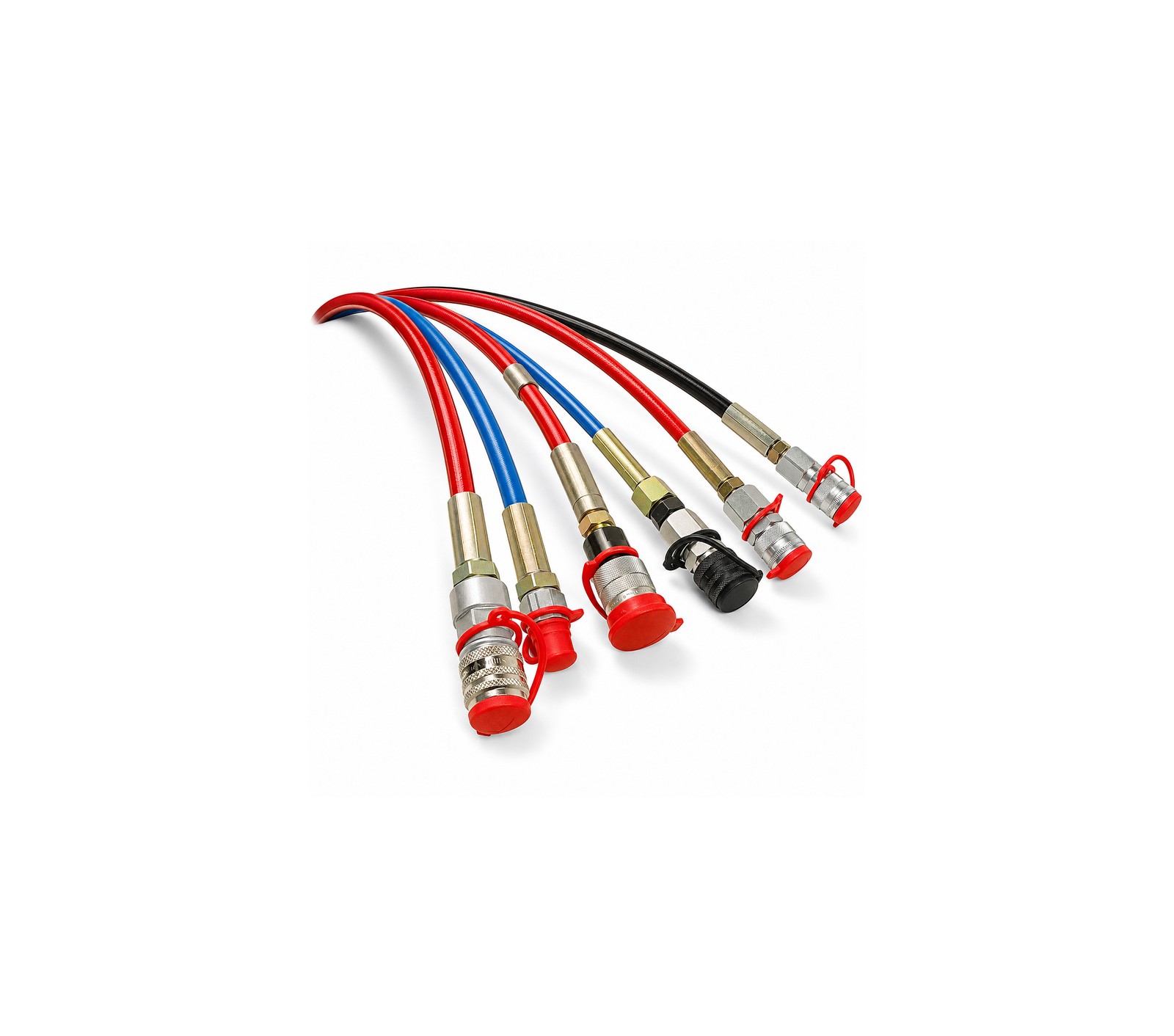


Thermoplastic hydraulic hose in this reference range uses a seamless PA tube and a PU cover. The source separates fibre-braid, steel-wire-braid and twin-hose versions, with different dimensions and pressure schedules. Identify the exact reinforcement and assembly before selecting a size; electrical properties cannot be inferred for the whole range.
Thermoplastic hydraulic hose in this reference range uses a seamless PA tube and a PU cover. The source separates fibre-braid, steel-wire-braid and twin-hose versions, with different dimensions and pressure schedules. Identify the exact reinforcement and assembly before selecting a size; electrical properties cannot be inferred for the whole range.
| Construction | Nominal ID (mm) | ID (inch) | Dash | Actual ID (mm) | OD one layer (mm) | OD two layers (mm) | WP one layer (MPa) | WP two layers (MPa) | BP one layer (MPa) | BP two layers (MPa) | Bend one layer (mm) | Bend two layers (mm) | Weight one layer (kg/m) | Weight two layers (kg/m) |
| Fibre braid | 5 | 3/16 | 3 | 4.8 | 9 | 9.5 | 21 | 35 | 84 | 140 | 20 | 38 | 0.06 | 0.09 |
| Fibre braid | 6 | 1/4 | 4 | 6.3 | 12 | 13 | 19 | 35 | 76 | 140 | 33 | 51 | 0.08 | 0.11 |
| Fibre braid | 8 | 5/16 | 5 | 7.9 | 13.5 | 14.5 | 17.5 | 30 | 70 | 120 | 46 | 60 | 0.1 | 0.14 |
| Fibre braid | 10 | 3/8 | 6 | 9.5 | 16 | 17.5 | 15.7 | 28 | 62.8 | 112 | 51 | 64 | 0.13 | 0.18 |
| Fibre braid | 13 | 1/2 | 8 | 12.7 | 19 | 21 | 14 | 24.5 | 56 | 98 | 76 | 100 | 0.16 | 0.21 |
| Fibre braid | 16 | 5/8 | 10 | 15.9 | 23 | 24.5 | 11 | 19.2 | 44 | 76.8 | 110 | 140 | 0.23 | 0.38 |
| Fibre braid | 19 | 3/4 | 12 | 18.9 | 27 | 28 | 8.7 | 15.7 | 34.8 | 62.8 | 127 | 170 | 0.3 | 0.44 |
| Fibre braid | 25 | 1 | 16 | 25.4 | 32.5 | 34.5 | 7 | 14 | 28 | 56 | 203 | 230 | 0.47 | 0.62 |
| Steel-wire braid | 5 | 3/16 | 3 | 4.8 | 9.5 | 10.5 | 50 | 65 | 200 | 260 | 70 | 70 | 0.12 | 0.18 |
| Steel-wire braid | 6 | 1/4 | 4 | 6.3 | 12 | 13.8 | 40 | 60 | 160 | 240 | 80 | 80 | 0.16 | 0.26 |
| Steel-wire braid | 8 | 5/16 | 5 | 7.9 | 13.5 | 15.5 | 30 | 40 | 120 | 160 | 90 | 90 | 0.2 | 0.29 |
| Steel-wire braid | 10 | 3/8 | 6 | 9.5 | 16.5 | 18 | 26 | 38 | 104 | 152 | 100 | 100 | 0.25 | 0.38 |
| Steel-wire braid | 13 | 1/2 | 8 | 12.7 | 19 | 21 | 21 | 31 | 84 | 124 | 120 | 120 | 0.32 | 0.45 |
| Steel-wire braid | 16 | 5/8 | 10 | 15.9 | 22 | 24.5 | 15 | 25 | 60 | 100 | 150 | 150 | 0.35 | 0.53 |
| Steel-wire braid | 19 | 3/4 | 12 | 18.9 | 26 | 28 | 13 | 20 | 52 | 80 | 180 | 180 | 0.39 | 0.61 |
| Steel-wire braid | 25 | 1 | 16 | 25.4 | 33 | 35 | 10 | 14 | 40 | 56 | 250 | 250 | 0.61 | 0.87 |
Fibre-braid and steel-wire-braid schedules are distinct source constructions. The source twin-hose image repeats the first five rows from each schedule and gives no separate twin outside width or joined-hose dimensions; confirm these rather than duplicating them as a new rating table. Steel-wire versions must not be represented as electrically nonconductive. Electrical properties require a selected, documented nonmetallic construction.
Fibre-braid and steel-wire-braid versions have substantially different pressures, bend radii and weights. Compare the selected construction’s own row rather than treating the shared nominal bore as a complete specification. The R7 wording is a source reference and does not establish that every listed wire version has the same standard qualification.
Do not describe a steel-wire-reinforced hose as nonconductive. Any electrical requirement needs the exact nonmetallic construction and documented test basis. For gas or pneumatic duty, ask for a supplier-approved, factory-prepared construction and cover; do not modify a hydraulic hose on the basis of a general catalogue note.
The detailed source sections give −40 to +100°C, whereas the opening paragraph has a conflicting +10°C entry. Confirm the supplied version’s actual limits. The twin table repeats parts of the other schedules and gives no independent joined width, so request a drawing for mounting and clearance.
Send the exact fluid, pressure cycle, temperature, bore, length and fitting details.



Send the reinforcement type, fluid, pressure, temperature, bore, length and connections. State any electrical or gas-service requirement so that a documented construction can be selected.