Automotive Rubber Hose Buying Guide
Automotive hoses serve different systems with different media, pressures, temperatures and connection requirements. Begin an enquiry by identifying the system and the required assembly. Coolant, heater, fuel, hydraulic brake, air brake, air-conditioning, oil-cooler and steering hoses are separate product families. A similar diameter or appearance does not establish an appropriate replacement. Use the individual product schedule to identify a reference, then obtain the dimensions, materials and documentation required for the actual vehicle or equipment application.
Identify the system and medium
Radiator and heater lines carry specified water or coolant mixtures, while fuel and lubricant circuits require compounds compatible with their own fluid formulations. A general rubber description does not establish compatibility with every additive, fuel blend or transmission fluid. Provide the fluid name, concentration where relevant, normal temperature and any short-duration conditions. For an air-conditioning assembly, identify the refrigerant and lubricant together. Do not infer compatibility with another refrigerant from a catalogue title or an existing hose photograph.

Read the dimensional schedule carefully
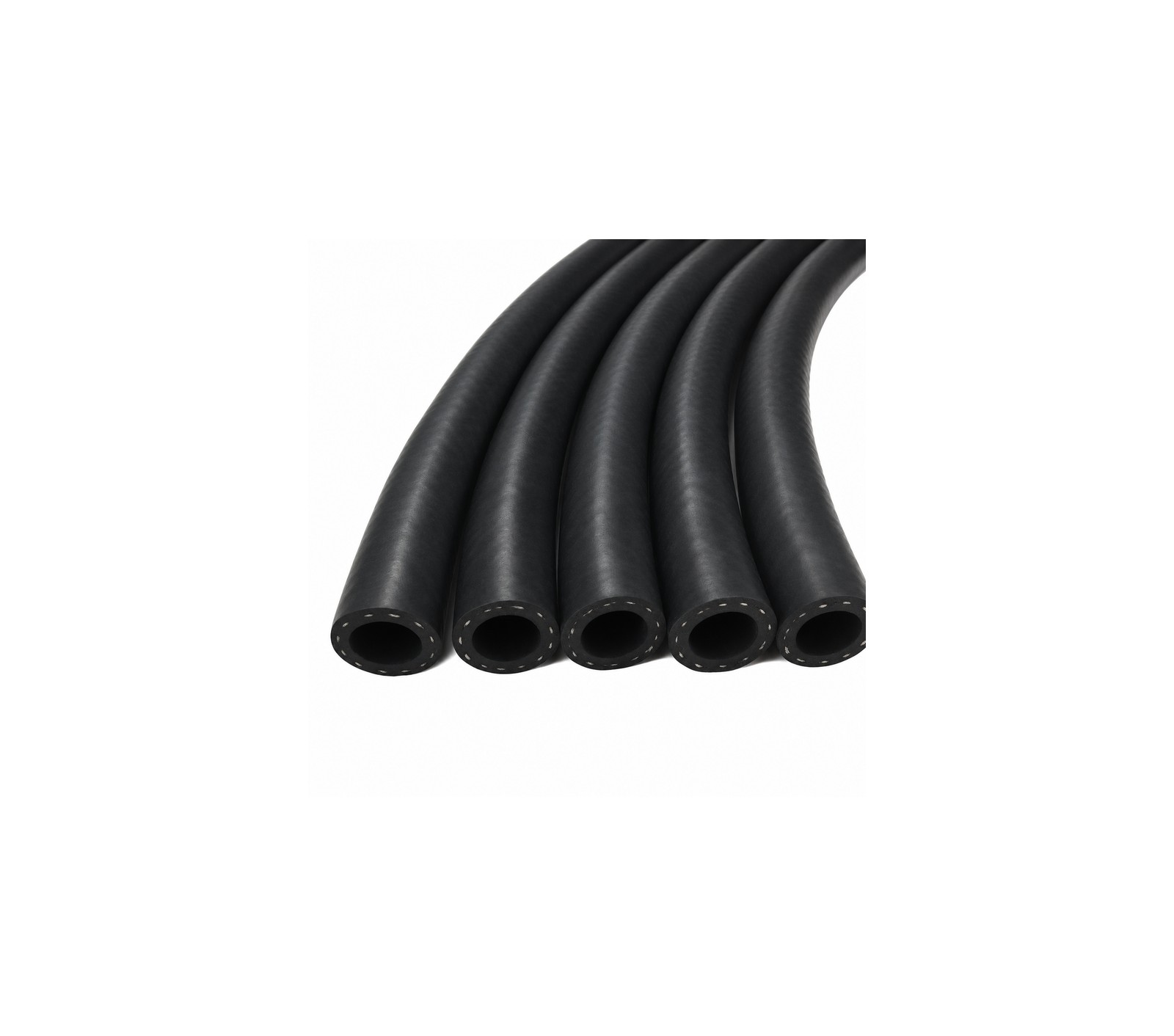
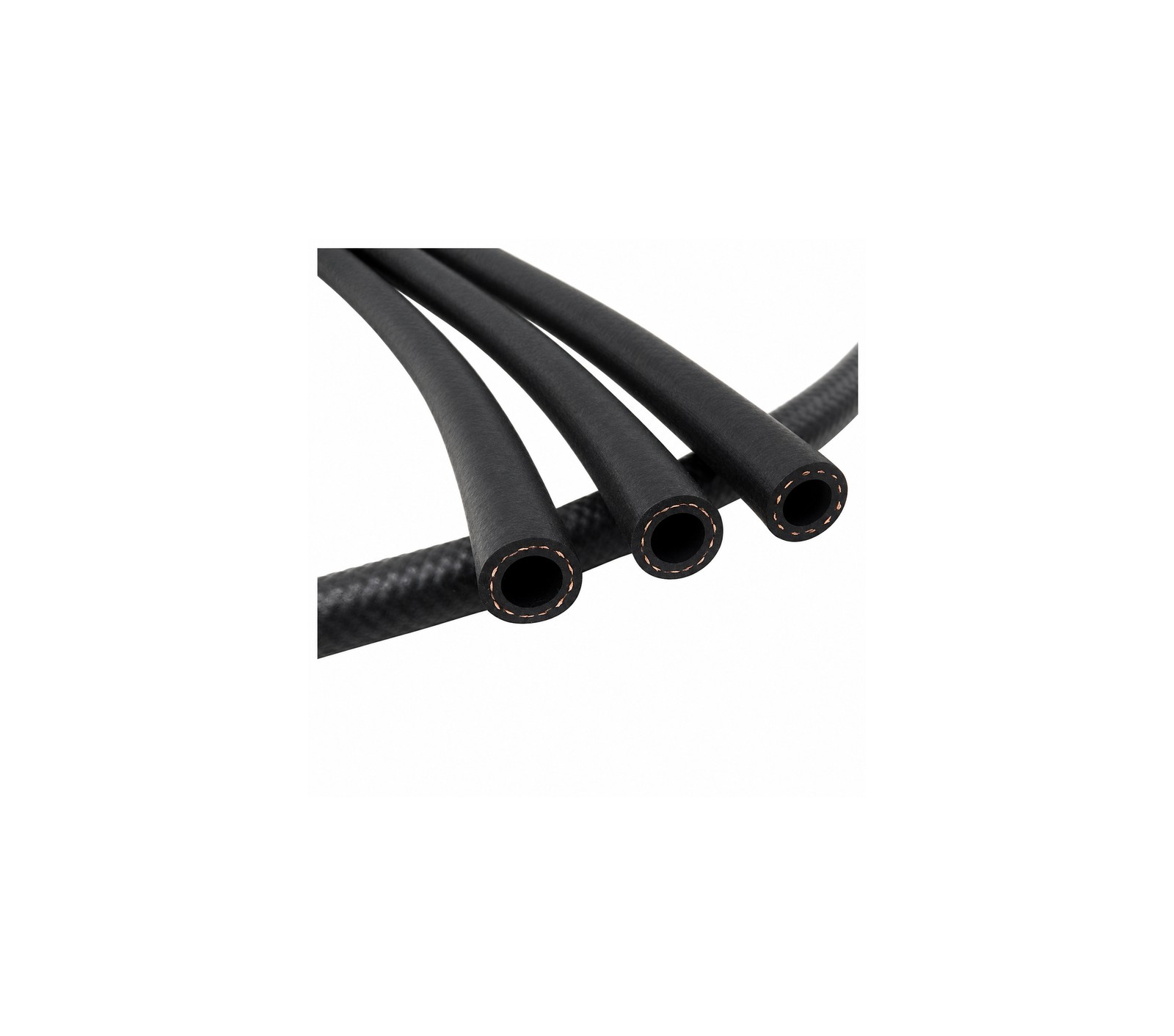
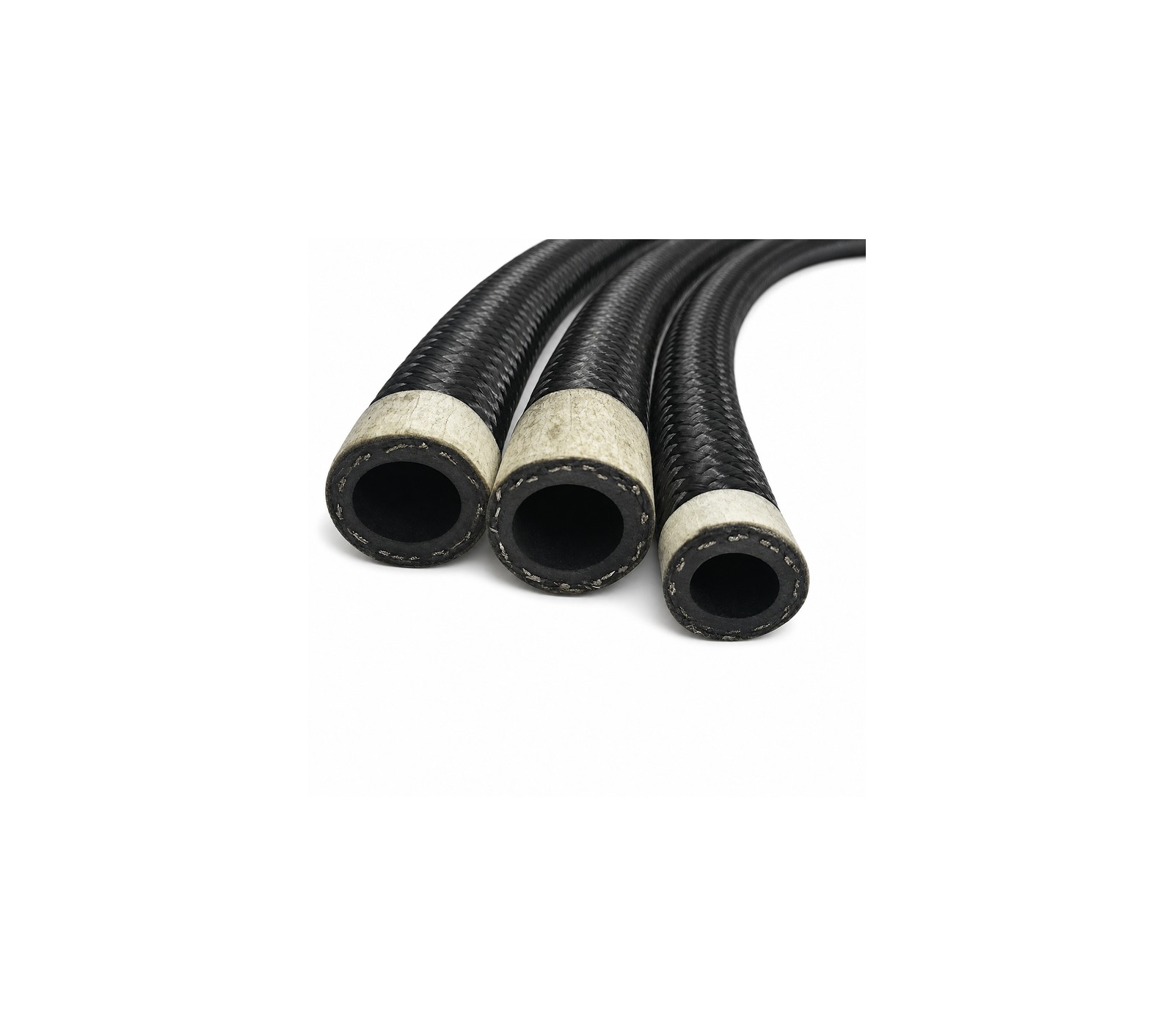
The reference tables retain nominal inch labels and metric dimensions as separate fields. These labels should not be treated as exact conversions. Specify the actual required inside diameter, outside diameter and tolerances, together with any wall-thickness requirement. The radiator schedule includes 26 bore references, while the steering schedule provides one reference size. A photograph showing several tubes does not create additional confirmed sizes. Where a source code or nominal size does not align clearly with a metric entry, resolve the dimension using the final drawing or supplied product data.
Separate working and burst pressure
Working pressure and burst pressure describe different conditions. A burst value is not a permitted operating pressure. Read the unit printed in each table: the catalogue uses bar, psi and MPa across different families. The paired units are retained independently from the source schedule. Confirm the applicable pressure and temperature combination for the actual hose, fittings and attachment method. The rating of a finished assembly is not established by a bulk-hose number alone or by selecting the highest value shown in a family table.
Distinguish the two brake-hose families
The J1401 reference identifies hydraulic brake-hose assemblies for the appropriate nonpetroleum-base brake fluid. J1402 identifies an air-brake hose and assembly family. These applications require their own qualified constructions and end fittings. The source catalogue pressure and temperature statements are identification references and do not prove a road-use approval. Request the application-specific documentation and complete assembly requirements. No vehicle approval, certification or test result is inferred from a printed marking, cleaned product image or standard number in a title.
Specify the complete end arrangement
Provide the connection type, sealing method, fitting angle, finished length and orientation for an assembly enquiry. Include any supports, protective sleeves or restrictions in the route. Cooling-system attachments, refrigerant fittings, steering fittings and hydraulic brake ends have different requirements. Confirm them as a complete system. The oil-cooler schedule uses AN reference identifiers, but those codes alone do not establish compatibility with arbitrary fittings. Supply the mating-end drawing or a reliable identification of the existing connection.

Confirm temperature, routing and qualification
A catalogue temperature range is not evidence that every listed pressure is available at its upper limit. Describe normal and peak conditions, movement, nearby heat sources and possible abrasion. Obtain the bend-radius and routing requirements for the selected supplied configuration; do not estimate them from a coiled photograph. For safety-related or vehicle-specific assemblies, identify the required qualification and documentation before the supply scope is agreed. The reference information on these pages supports an enquiry and does not replace an approved assembly specification.
Send a clear quotation request
Include the system, medium, dimensions, pressure, temperature, length, end connections, quantity and required documentation. Attach a drawing or dimensioned description when available. Fronteck can review the requested hose family and supply configuration using those details. Confirm the final material, dimensions, service limits and assembly documentation in the quotation or approved drawing. Contact us with your automotive hose requirements.